July the 24th 2006 at about 1:30am, my friend Araz, a 17-year old girl, was with some friends at a dance club in Yerevan.
On their way home, they had to stop off at a friend's home to pick up some of their belongings. They were in a taxi, which they got out of on Baghramyan Street, and when Araz and her sister were crossing the street, Araz was hit by a reckless driver.
This was a split-second after she let go of her sister's hand.
They tried calling an ambulance, but there was no phone connection. They tried stopping passing cars, but nobody stopped. Her brother carried Araz and ran to a car that drove them to the hospital, but it was too late. Araz wasn't breathing anymore.
A 3-month long trial was held to punish the driver, and in the end the man received 2 years of probation, not allowed to leave the country and drive for 2 years. Not even 6 months after the incident, the man's sentence was annulled since it was his first such crime.
Araz was just about to turn 18, and had just graduated from high school, and looking forward to university.There is NOTHING being done in Armenia to prevent dangerous driving.
The majority of police seem to care less about preventing such accidents. Anyone who has been to Armenia knows how bad the situation is.
Please sign petition titled Araz Petition hosted with free Petition hosting site.
Wednesday, December 20, 2006

Friday, December 01, 2006

When computer industry executives heard about a plan to build a $100 laptop for the developing world’s children, they generally ridiculed the idea. How could you build such a computer, they asked, when screens alone cost about $100?
...Ms. Jepsen, a former Intel chip designer, found a way to modify conventional laptop displays, cutting the screen’s manufacturing cost to $40 while reducing its power consumption by more than 80 percent. As a bonus, the display is clearly visible in sunlight
That advance and others have allowed the nonprofit project, One Laptop Per Child, to win over many skeptics over the last two and a half years. Five countries — Argentina, Brazil, Libya, Nigeria and Thailand — have made tentative commitments to put the computers into the hands of millions of students, with production in Taiwan expected to begin by mid-2007."
...One factor setting the project apart from earlier efforts to create inexpensive computers for education is the inclusion of a wireless network capability in each machine.
The project leaders say they will employ a variety of methods for connecting to the Internet, depending on local conditions. In some countries, like Libya, satellite downlinks will be used. In others, like Nigeria, the existing cellular data network will provide connections, and in some places specially designed long-range Wi-Fi antennas will extend the wireless Internet to rural areas.
The project leaders say they will employ a variety of methods for connecting to the Internet, depending on local conditions. In some countries, like Libya, satellite downlinks will be used. In others, like Nigeria, the existing cellular data network will provide connections, and in some places specially designed long-range Wi-Fi antennas will extend the wireless Internet to rural areas.
...When students take their computers home after school, each machine will stay connected wirelessly to its neighbors in a self-assembling “mesh” at ranges up to a third of a mile. In the process each computer can potentially become an Internet repeater, allowing the Internet to flow out into communities that have not previously had access to it.
...“I think it’s wonderful that the machines can be put in the hands of children and parents, and it will have an impact on their lives if they have access to electricity,” Larry Cuban, a Stanford University education professor, said in an interview. “However, if part of their rationale is that it will revolutionize education in various countries, I don’t think it will happen, and they are naïve and innocent about the reality of formal schooling.”
Tuesday, November 28, 2006

Wednesday, November 22, 2006
Cultural Diplomacy

It is the Saison Française en Arménie; for the last two months it’s been everything French in Yerevan. The French Embassy in Armenia has been hosting French concerts at venues large and small, art exhibits at everything from the high-brow National Gallery to the edgy NPAK Center for Contemporary Experimental Art. French-themed lectures, French films, French fashion shows. And the crème de’ la crème: a hugely impressive alfresco show (replete with lighting and stage construction at caliber likely never before seen in this country), free to the public, in the middle of Republic Square featuring the legendary Charles Aznavour.
Who doesn’t love Charles Aznavour? That’s exactly what the French were banking on. Everyone loves Charles. And who was in attendance for that open-air performance together with the thousands of Yerevantsis, enjoying the artistry of the beloved 82 year-old entertainer and symbol of Armenian-French unity? None other than President Jaques Chirac himself. It was brilliant. Coupled with the serendipitously well timed of the Parliament's passage of a pro-Armenian bill last month: now everyone loves the French.
I was left stunned at how much more effective of a way to create allies by winning the hearts and minds of a population this was than the American model. US presence has been here literally since day one of independence. The US government provides more aid per capita to Armenia than to almost any other nation aside from Israel. But by being so pervasive, they’ve effectively shot themselves in the foot. Now, every USAID funded project and every US backed initiative, even when well-intentioned, is greeted with skepticism. Peace Corps volunteers are considered spies by the general public. The gigantic new US Embassy complex, with its barbed wire fences, is an eye-sore. And what is going on inside is worse: Turkish laborers were brought in, and paid double that of local Armenian builders, to work on the construction. If not recognizing (or chosing to ignore) the gravity of insult related to this centuries-old wound isn’t the most culturally insensitive move that could ever have been made, just this summer, Ambassador Evans was "recalled" from his diplomatic post and will likely be forced to 'retire' from the State Department for suspiciously undisclosed reasons. It is general knowledge that the reason is because he spoke publicly with compassion about recognition of the Armenian Genocide. People complain about the US government, mock its leadership, and make fun of its citizen’s obnoxious mannerisms. To much of the populous here, America is ignorant and insensitive. It’s crass and it’s arrogant.
But yet, in the end, it’s a love/hate relationship (or rather: “hate to love”). It’s like some kind of guilty-pleasure complex. A great number of people are employed by the NGOs that are funded by USAID and learn a great deal in their jobs; US films, music, videos and products are still desired and consumed; and people still on some level believe in “the American dream.” Hundreds of people go to great lengths to leave this country and get visas to live in the US…but never without a grumble. One last jab, even when lady liberty is waving you in.
Perhaps it’s just easier to love Europe.
Sunday, November 19, 2006
Again?
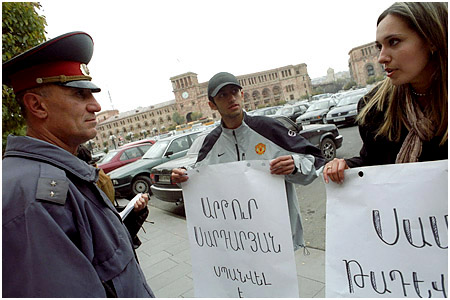
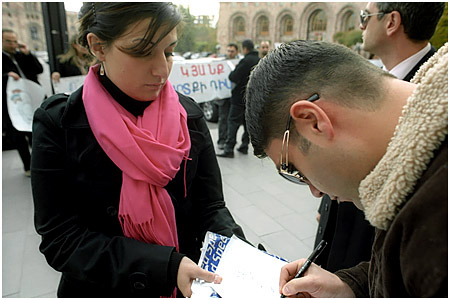
photos by Onnik Krikorian
November 17th, 2006.
Ministry of Foreign Affiars, YEREVAN.
My fingers are numb and my nose is bright red from the cold, and I recall that last time I was standing here it was so hot outside that fellow protesters were complaining about the heat and trying to reassemble our picket line to fall within the shade of the trees.
We’re still speaking out about the same thing- 7 months later.
However, this is no tirade or complaint. I’m happy to see that there are young people here in Yerevan that WILL organize and protest again, and again. I answered to so many passers-by who said “this is useless,” “they aren’t going to stand up to Russia,” “they’re not going to listen to you,” “the government doesn’t care,” that we aren't necessarily here for immediate results, but voicing your concern is the fist step.
Encouraging widespread civic participation and convincing citizens of the efficacy of that participation is a large task, and I’m not expecting it to happen any time soon. But with every one, two, or dozen, of those passersby who were convinced by the pleas of our picketers to stop and sign the petition, we are making progress.
Pictured above are two of the organizers: Isabella, an articulate local activist with the Helsinki Committee, and Tamar, a good friend from Providence who has been doing research on youth and civil society the Fulbright for the last year and a half.
RFE/RL: Published on November 17, 2006
YOUTH CALLS FOR ACTION TO STOP KILLINGS OF ETHNIC ARMENIANS IN RUSSIA
About three dozen young men gathered near the Armenian Foreign Ministry building on Friday to denounce the recent killings of ethnic Armenians in Russia and call for Yerevan’s official response to what they believe to be crimes committed on ethnic grounds. They said their previous protest actions near the Russian Embassy in Yerevan were followed by more murders of ethnic Armenians in Russia with clearly ethnic motives that they said had been covered up by Russian law officials as hooligan actions. This time around the young activists addressed their appeal to Foreign Minister Vartan Oskanian.
“The Year of Armenia in Russia is being accompanied with brutal murders of young Armenians,” a letter addressed to Oskanian reads. “We are full of grief and anger with the criminal inaction under the pretext of the so-called complementary policy.” The letter was originally signed by nine activists. About 200 passers-by also joined in the demand by putting their signatures to the appeal.
One of the activists, Izabela Sarkisian, cited statistics according to which some 3,000 Armenians have been murdered in Russia in the past ten years. “All those murdered are qualified as hooliganism and not as murders on racist grounds. We call for Armenia’s clear stance on this matter,” she told RFE/RL. “We believe that under the constitution the Republic of Armenia has the obligation to take care of its every citizen and do everything for our compatriots to feel more secure in foreign countries.”
Head of the Ministry’s Russia Division Marina Balayan accepted the letter from the protestors and promised them to forward it to Minister Oskanian.
Also check out a short release printed the very next day:
Russian MFA Will Attain Detailed Investigation of Armenian Teenager Murder
Sunday, November 12, 2006
"Never Again"

"The Holocaust, Pol Pot's Cambodia, Rwanda, Bosnia, Darfur….
And every time a U.S. president, a British Prime Minister, a U.N. Secretary General says, "Never again."
Yet it happens-again, and again, and again….Why?
Because, our leaders say, We didn't know.Yet they did know-recent studies have shown that the British knew conclusively what was going on at Auschwitz…yet buried that knowledge in their files because it would have forced them to change their war plans.
Everyone knew what was going on in Cambodia, post-the Vietnam War, as the Academy Award-winning movie "The Killing Fields" demonstrates … yet the powers that be declined to admit it, for fear they would have to do something.
In Carla Garapedian's powerful new film, "Screamers," Pulitzer prize-winner Samantha Power says President after President, Democrat and Republican, have known about genocides as they were happening … but have chosen not to act.
In Iraq, Reagan did not want the horrors of Saddam Hussein's massacre against the Kurds to come out, because then he would have to do something to stop him. In Bosnia, world television coverage of the genocide convinced the international community to step in…but only after 200,000 had been murdered.
In Rwanda, Bill Clinton did not want the true horrors to come out …because then he would have to do something.
And now, in Darfur, George Bush has finally declared the desolation of the Southern Sudan a "genocide"-yet refused to do what it takes to stop it.
Why? Because, once again, as in 1915, when the U.S. ambassador to Turkey, Henry Morgenthau, first reported the wholesale extermination of the Armenian population by the Ottoman Turks in Anatolia, it was denied so the United States would not be forced to act. That reaction gave Hitler his impetus for the Holocaust: "Who remembers the Armenians?" he declared in 1939, before ordering the murder of 6 million European Jews.
In "Screamers," Garapedian traces the history of modern-day genocide-and genocide denial- from the fertile "Holy Mountains" of Anatolia to the current atrocities in Darfur . This documentary is as shattering as it is powerful, which includes interviews and live performance footage with System Of A Down, the multi-platinum, Grammy-Award winning rock band, all of whose members are Armenian-American. The film is laced with seven of the band's songs from "Holy Mountains" to "P.L.U.C.K." to the #1 hit "B.Y.O.B." that illuminate the band's views on political and social issues."
The film opens Dec. 8th in L.A., but hopefully it will open nation/world-wide before long.
Friday, November 03, 2006
The modern middle eastern woman's plight
a common problem. thanks Eva.
"Over the last two decades, the Persian Gulf has become the economic pole, and its pull has only grown stronger since the monthlong war this summer between Israel and the Hezbollah militia in Lebanon. With the political situation here still so uncertain, investment and work opportunities are growing even scarcer, and the gender imbalance worsens.
For young women here, dressing fashionably is a competitive game; stare-down contests between young women in restaurants and malls are common, particularly, say the girls, when one of the women is accompanied by an attractive Lebanese man.
...“The social pressures on young women are just huge,” Ms. Yazbek continued. “The focus is more and more on being beautiful, on pleasing other people. The competition is intense, conformity is a big thing, and everyone, rich and poor, gets plastic surgery. You can go to parts of Beirut where almost every young woman has the same little nose.”
...“The guys that remain in Lebanon are the stupid ones!” exclaimed Nayiri Kalayjian, 19, who was hitting the bars on Monot Street, in central Beirut, with three girlfriends.
“We’re too good for them,” she said. “The ones who remain in Lebanon are the ones with closed mentalities, the ones who just want a virgin girl. You start to feel that the men who stay in Lebanon are the ones with no ambition in their work, and so you wonder, why are they still here?”
"Over the last two decades, the Persian Gulf has become the economic pole, and its pull has only grown stronger since the monthlong war this summer between Israel and the Hezbollah militia in Lebanon. With the political situation here still so uncertain, investment and work opportunities are growing even scarcer, and the gender imbalance worsens.
For young women here, dressing fashionably is a competitive game; stare-down contests between young women in restaurants and malls are common, particularly, say the girls, when one of the women is accompanied by an attractive Lebanese man.
...“The social pressures on young women are just huge,” Ms. Yazbek continued. “The focus is more and more on being beautiful, on pleasing other people. The competition is intense, conformity is a big thing, and everyone, rich and poor, gets plastic surgery. You can go to parts of Beirut where almost every young woman has the same little nose.”
...“The guys that remain in Lebanon are the stupid ones!” exclaimed Nayiri Kalayjian, 19, who was hitting the bars on Monot Street, in central Beirut, with three girlfriends.
“We’re too good for them,” she said. “The ones who remain in Lebanon are the ones with closed mentalities, the ones who just want a virgin girl. You start to feel that the men who stay in Lebanon are the ones with no ambition in their work, and so you wonder, why are they still here?”
Thursday, November 02, 2006
my fellow americans...
happy early election day.
once again i find myself overseas during a decision-making turning point in america. in italy, during the decision to go into iraq in the spring of 2002, i watched impassioned anti-war displays. in armenia, during the election in 2004, i watched the international community bemused by the outcome. and once again today, i am moved to remind you that the rest of the world is watching.
here's the latest of what is being widely circulated and creating perceptions abroad. i'm disappointed to say that it is in a very similar vein to all those things i saw and heard before...
Furthermore, since the "moral divide" has been discussed ad nauseam once again as a potential "wedge issue" during this mid-term election, it is highly appropriate that i publicly promote the documentary SEEING RED. I met the director Leah Belsky in DC and listen to her explain the goal of this film:
Two Jews, a Hindu,and a born-again Christian, disillusioned after the 2004 electionand troubled by the idea that their nation is bitterly divided over morality, set out to investigate the power of evangelical Christianity in American political life.
Coming off 6-months in Armenia trying to explain the "Red-Blue" divide to all the non-Americans I conversed with, I found the topic fascinating and volunteered to help work on this film last year- through the fall and winter of 2005- as an assistant producer.
I think the title is brilliant and shows the power of documentary: you can take something in quickly, in sound bites and make a rash interpretation ("seeing red!"), or you can really explore a topic and try to understand its complexities ("SEEING red").
once again i find myself overseas during a decision-making turning point in america. in italy, during the decision to go into iraq in the spring of 2002, i watched impassioned anti-war displays. in armenia, during the election in 2004, i watched the international community bemused by the outcome. and once again today, i am moved to remind you that the rest of the world is watching.
here's the latest of what is being widely circulated and creating perceptions abroad. i'm disappointed to say that it is in a very similar vein to all those things i saw and heard before...
Furthermore, since the "moral divide" has been discussed ad nauseam once again as a potential "wedge issue" during this mid-term election, it is highly appropriate that i publicly promote the documentary SEEING RED. I met the director Leah Belsky in DC and listen to her explain the goal of this film:
Two Jews, a Hindu,and a born-again Christian, disillusioned after the 2004 electionand troubled by the idea that their nation is bitterly divided over morality, set out to investigate the power of evangelical Christianity in American political life.
Coming off 6-months in Armenia trying to explain the "Red-Blue" divide to all the non-Americans I conversed with, I found the topic fascinating and volunteered to help work on this film last year- through the fall and winter of 2005- as an assistant producer.
I think the title is brilliant and shows the power of documentary: you can take something in quickly, in sound bites and make a rash interpretation ("seeing red!"), or you can really explore a topic and try to understand its complexities ("SEEING red").
If interested, contact the director and find out about setting up a screening. www.seeingredthemovie.com
Tuesday, October 31, 2006
thankfully
one evening back in a january or february i started to feel sick to my stomach as i watched a music video on mtv. i thought of how many thousands of dollars must have been spent to make that video...so that maybe some young kids would salivate at how hot mariah carey is...so that maybe some of those kids' interest would be peaked enough to listen to the rest of the tracks on the album...and so that maybe a few of them would like what they heard enough to buy an album for $12.99.
i called a friend and complained. i wondered why execs thought such an investment would have enough of a return to make it worth the expense. and further, i wondered why society doesn't think its a worthwhile investment to invest in PEOPLE. even when considered within the framework of a consumerist society - wouldn't giving an underprivelidged person a better life and education make that person employable, make them a tax payer, consumer and contributing member of society. Isn't that a more important return on investment??
and then, this week while i was back home in DC, during a conversation expressing my frustration with selfish motivations of wealth-accumulation with one of my favorite unconventional souls, i brought up this point again. and the response i received from him was one which i am so grateful for. it seems i'm not the only person who thinks this way:
i called a friend and complained. i wondered why execs thought such an investment would have enough of a return to make it worth the expense. and further, i wondered why society doesn't think its a worthwhile investment to invest in PEOPLE. even when considered within the framework of a consumerist society - wouldn't giving an underprivelidged person a better life and education make that person employable, make them a tax payer, consumer and contributing member of society. Isn't that a more important return on investment??
and then, this week while i was back home in DC, during a conversation expressing my frustration with selfish motivations of wealth-accumulation with one of my favorite unconventional souls, i brought up this point again. and the response i received from him was one which i am so grateful for. it seems i'm not the only person who thinks this way:
Armenia from Above
Armenie vue du Ciel.

Amazing pictures...
http://www.yannarthusbertrand.com/yann2/affichage.php?reference=armenie_016&pais=Armenie
Monday, October 16, 2006


Friday, October 13, 2006
Blood, Sweat and Tears

The fruit of our efforts from last week's ATHGO International Symposium. Out of 200+ international participants, 16 of us were elected to create a "Resolution Committee," which was charged with drafting a concrete and innovative UN resolution proposal which will be distributed to UN missions worldwide, and other governmental and non-governmental bodies for consideration. As the moderator of the resolution committee, I have to say I was extremely impressed with the vision of our group, and truly think we have a remarkable idea to propose to the developing world. I hope you can work your way through the formal language and grasp the ultimate idea we have proposed. Mr. Surbuland Khan, executive Director of the UN GLobal Alliance for ICT and Devleopment (UNGAID) was impressed, so on behalf of my group, I hope you are too.
To Whom it may Concern:
Attached please find the Resolution Committee's final draft of the resolution emergent from the 2006 Symposium in Yerevan, Armenia. We proudly present it to you as a plan of action to bring before all organizations and governments you see fit.
Accompanying this resolution is a supporting document outlining in further detail our vision of the solutions we present. If further clarification is needed, please do not hesitate to ask.
We would like to thank ATHGO International and its distinguished guests for allowing us the opportunity to participate in this symposium. Events such as this allow our voices to be heard with greater impact within the global community, and provide a point of inspiration for further individual action. We would, with pleasure, enjoy presenting our position at any and all future events, including the Cairo Summit in May, as suggested by Mr. Khan.
Thank you once again.
On Behalf of the 2006 ATHGO International Yerevan Symposium, Respectfully Submitted by:
Andranik Ayvazyan
Nina Balayan
Chiara Bortoluzzi
Justine Espiritu
Vadim Gordienko
Gohar Grigorian
Kirsten Hildonen
Amalia Horsepyan
Iman Kamali
Ani Koeharyan
Logan Koffler
Marilisa Lorusso
Stefano Mosso
Arpine Sargsyan
Anoush Tatevossian
Charlotte Von Dewall
ATHGO International
13 October 2006
QUESTION OF ICT DEVELOPMENT IN LANDLOCKED DEVELOPING COUNTRIES
Recalling the United Nations Millennium Declaration, resolution 55/2 adopted 8 September 2000, and resolution 57/295 of 4 March 2003, in which Member States pledged to financially and technically support the formation of a global partnership for development, and subsequently identified the need to establish a comprehensive United Nations information and communication technology (ICT) strategy, recognized the importance of global networks and stressed the implementation of training programs to ensure maximum use of technology in developing nations,
Guided by the additional challenges extant in Landlocked Developing Countries (LLDCs) due to their geographic orientation, including small domestic markets physically isolated from the world economy, it is understood to be paramount to use ICTs to virtually connect their local markets to global ones, thus establishing a link that will reduce demands on both LLDCs and their transit countries regarding physical access,
Fully aware many LLDCs do not possess the requisite infrastructure to take full advantage of ICT connectivity, it is nevertheless necessary to proceed with ICT development in areas already so equipped to handle it, while acknowledging attention still must be allocated to infrastructure and transit solutions such as outlined in the Almaty Programme of Action,
Emphasizing the mandate for partnerships among public, private and civic sectors within individual states to ensure ICT programs are both appropriate to and cognizant of unique domestic demands,
Believing a state’s own educated youth are a crucial and underutilized resource for advancing ICT presence, and one that can be depleted by a lack of opportunities for employment and career advancement within LLDCs,
Deeply convinced LLDCs should not remain bound by and dependent upon international intervention to maintain ICT program viability, but instead organizations providing ICT assistance should forge partnerships with national institutions and local communities to ensure ICT initiatives will create self-reliant and sustainable development, respectful of national identity, traditions and heritage and in avoidance of harmful cultural imperatives, by focusing on networks among LLDCs and self-perpetuating liberal economic growth,
1. We call for the establishment of a nationally coordinated network involving public, private and civil society under the mentorship and coordination of UNGAID;
a) This body should be sustained by a mixed financial system consisting of international, national and private sector funds;
b) Funding should be structured in a way that all parties have an equal voice in the designated goals for the fund, meaning there should be no connection between the amount of money contributed and voting share;
c) UNGAID should assume mentoring responsibility in incubating these national bodies, grant legitimacy and provide valuable leadership and guidance from the experience of UNGAID’s inclusive, decentralized, multi-stakeholder network;
2. We further recommend the primary operational task of this body should be to implement a national volunteer program utilizing each country’s own youth to educate rural and distant populations in ICTs;
a) Volunteers are students pursuing or possessing higher education, are subject to a rigorous selection process and intensive training program;
b) After comprehensive research, conducted by the parent body, a customized training curriculum is developed that addresses rural and distant populations’ specific needs and offers ICT solutions to be introduced by volunteers
3. We further encourage follow-up actions to ensure future sustainability whereby ICT knowledge augmentation will perpetuate through continued training and certification of qualified individuals within the local population, and through the initiation of an international Business Development Initiative;
a) Individuals showing the most aptitude throughout the training will be given additional instruction by the volunteer, culminating in certification as a local instructor to continue to advance ICT education within the population after the volunteers’ departure;
b) The Business Development Initiative will be an international program for LLDC trained communities wherein individuals within the local population may utilize electronic resources to design and submit business plans for potential start-up grants to establish local businesses;
4. We further support continuous program enhancement through volunteer evaluation and an independent monitor measuring regional progress;
a) Volunteers will be evaluated by both the parent organization and trainees within local populations to ensure effectiveness;
b) An independent monitoring agency or individual will be assigned within each country, subject to the approval of UNGAID, to revisit trained populations at predetermined intervals to assess the permanent impact of ICT training, gather statistical data and conduct a cost-benefit analysis of the local economic impact of the program.
Sunday, October 01, 2006
i concur in astonishment at such disconfirmed expectations
“We thought after 9/11, 5 years ago, that there would be a move towards understanding in the region, the adopting of responsible middle-east policy, and realization that in order to put an end to fundamentalism, to extremism, to jihadism, you must resolve the issues from which they stem. Instead we got a politicized simplistic policy of angels versus deamons, with-us or against-us.”
- Palestinian Member of Parliament
- Palestinian Member of Parliament
Saturday, September 30, 2006
To answer the question: "why"
Anoush Tatevossian
Yerevan, Armenia: ATHGO International Symposium
Information & Communication Technology:
Opportunities and Challenges in Landlocked Developing Countries
Personal Statement: Describe your unique qualities and passion for your advocacy work and what let you toward that work or schooling
When geography fates you as a land-locked country with little to no exportable and sustainable natural resources, you must become innovative to survive. And the further the developed world gets from the developing world, the more imperative it becomes that a nation identify its most malleable and flexible resources to attempt to bridge that ever-growing chasm, lest it find itself doomed to be left behind. It is my job as the Executive Director of the Armenian Volunteer Corps (AVC), a registered non-profit based in Yerevan, to incubate one of Armenia’s most dynamic resources: people.
The Armenian nation is a unique one in that only one-third of its people actually live within the physical borders of modern-day Armenia. Due to several devastating events in its long history, the Armenian people have been severed from one another and scattered across the entire globe. Finally today, Armenia is a free and independent Republic with opportunities to grow into a country that its entire people can be proud to align with. However, ideologically or nostalgically connecting with this country will not help it advance. There are many real-world issues looming over whether Armenia can break out of its current stagnant level of democratization and development, many of which must first be tackled internally. My organization calls on Diasporan Armenians of all ages to volunteer their time, knowledge and energy by living and working in Armenia from one month to one year as an investment of hope in the future of our nation.
By running AVC, I act as a facilitator to help Diasporan Armenians seamlessly integrate into society here because I firmly believe that in a developing country such as Armenia, the presence of each volunteer leaves a footprint in the country's malleable future. I know that the exchange of ideas, values and experience between Diasporans and native Armenians connects human, informal and capital resources which will help rebuild our country.
This is the best and fastest way that Armenia can at least conceptually break out of its land-locked, blockaded position, and actually reach all around the globe. Technology and communication has made it infinitely easier to connect people to resources, to other people, to networks, to opportunities for collaboration. This year I brought AVC to the 21st century by marketing not only the old fashioned word-of-mouth way, but by opening a blog site, bolstering the website, tapping into media outlets, and reaching out electronically to Diasporan Armenians across the world to alert them of this very important call to action. I know that each person who has spent their life abroad, but now comes here and contributes their skills and ideas, is sewing seeds of innovation that create more and more potential opportunities for this country’s growth. And as any gardener can tell you, the more seeds you sew, the more opportunities there are that some will flourish.
I sometimes see myself as that gardener. I take the responsibility of introducing influences into a nascent and changing society very seriously. I carefully and thoroughly scrutinize the motivation of each volunteer applicant before accepting them into our program, and throughout their entire term of service in country I communicate to them that they must be mindful of the delicate nature of the challenge they have taken on.
In today’s globalized and competitive world, where innovation is a necessity for survival, the following ancient saying has regained popularity: “Every morning in Africa, a gazelle wakes up. It knows that it must run faster than the fastest lion or it will be killed.” It is my responsibility as a concerned Armenian to play my part in ensuring that Armenia runs faster.
Yerevan, Armenia: ATHGO International Symposium
Information & Communication Technology:
Opportunities and Challenges in Landlocked Developing Countries
Personal Statement: Describe your unique qualities and passion for your advocacy work and what let you toward that work or schooling
When geography fates you as a land-locked country with little to no exportable and sustainable natural resources, you must become innovative to survive. And the further the developed world gets from the developing world, the more imperative it becomes that a nation identify its most malleable and flexible resources to attempt to bridge that ever-growing chasm, lest it find itself doomed to be left behind. It is my job as the Executive Director of the Armenian Volunteer Corps (AVC), a registered non-profit based in Yerevan, to incubate one of Armenia’s most dynamic resources: people.
The Armenian nation is a unique one in that only one-third of its people actually live within the physical borders of modern-day Armenia. Due to several devastating events in its long history, the Armenian people have been severed from one another and scattered across the entire globe. Finally today, Armenia is a free and independent Republic with opportunities to grow into a country that its entire people can be proud to align with. However, ideologically or nostalgically connecting with this country will not help it advance. There are many real-world issues looming over whether Armenia can break out of its current stagnant level of democratization and development, many of which must first be tackled internally. My organization calls on Diasporan Armenians of all ages to volunteer their time, knowledge and energy by living and working in Armenia from one month to one year as an investment of hope in the future of our nation.
By running AVC, I act as a facilitator to help Diasporan Armenians seamlessly integrate into society here because I firmly believe that in a developing country such as Armenia, the presence of each volunteer leaves a footprint in the country's malleable future. I know that the exchange of ideas, values and experience between Diasporans and native Armenians connects human, informal and capital resources which will help rebuild our country.
This is the best and fastest way that Armenia can at least conceptually break out of its land-locked, blockaded position, and actually reach all around the globe. Technology and communication has made it infinitely easier to connect people to resources, to other people, to networks, to opportunities for collaboration. This year I brought AVC to the 21st century by marketing not only the old fashioned word-of-mouth way, but by opening a blog site, bolstering the website, tapping into media outlets, and reaching out electronically to Diasporan Armenians across the world to alert them of this very important call to action. I know that each person who has spent their life abroad, but now comes here and contributes their skills and ideas, is sewing seeds of innovation that create more and more potential opportunities for this country’s growth. And as any gardener can tell you, the more seeds you sew, the more opportunities there are that some will flourish.
I sometimes see myself as that gardener. I take the responsibility of introducing influences into a nascent and changing society very seriously. I carefully and thoroughly scrutinize the motivation of each volunteer applicant before accepting them into our program, and throughout their entire term of service in country I communicate to them that they must be mindful of the delicate nature of the challenge they have taken on.
In today’s globalized and competitive world, where innovation is a necessity for survival, the following ancient saying has regained popularity: “Every morning in Africa, a gazelle wakes up. It knows that it must run faster than the fastest lion or it will be killed.” It is my responsibility as a concerned Armenian to play my part in ensuring that Armenia runs faster.
Been working too hard lately... ;-)
Word of the Day for Friday, September 29, 2006
monomania \mon-uh-MAY-nee-uh; -nyuh\, noun:
1. Pathological obsession with a single subject or idea.
2. Excessive concentration of interest upon one particular subject or idea.
One of the themes in the book was the necessity for a leader to be passionate about the work. And sometimes in a corporate setting, passion becomes monomania.
-- "Balancing the Personal and the Professional", New York Times, October 10, 1999
monomania \mon-uh-MAY-nee-uh; -nyuh\, noun:
1. Pathological obsession with a single subject or idea.
2. Excessive concentration of interest upon one particular subject or idea.
One of the themes in the book was the necessity for a leader to be passionate about the work. And sometimes in a corporate setting, passion becomes monomania.
-- "Balancing the Personal and the Professional", New York Times, October 10, 1999
Happy Belated
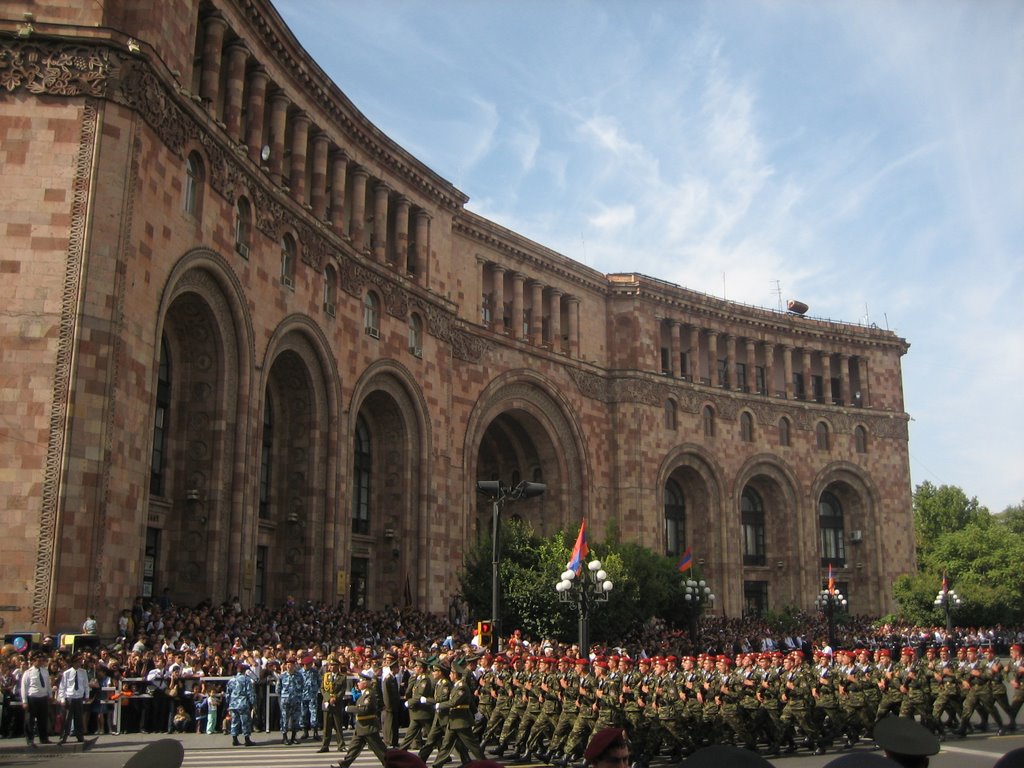

A few photos from the Independence Day Parade on Sept. 21st. Apparently, there hadn't been a parade of any kind here for about 8 years. Historic day. The "parade" was more a show of the Republic's hardware and military might, than floats and flowers...but it drew a big crowd to Republic Square for an afternoon of patriotic solidarity.
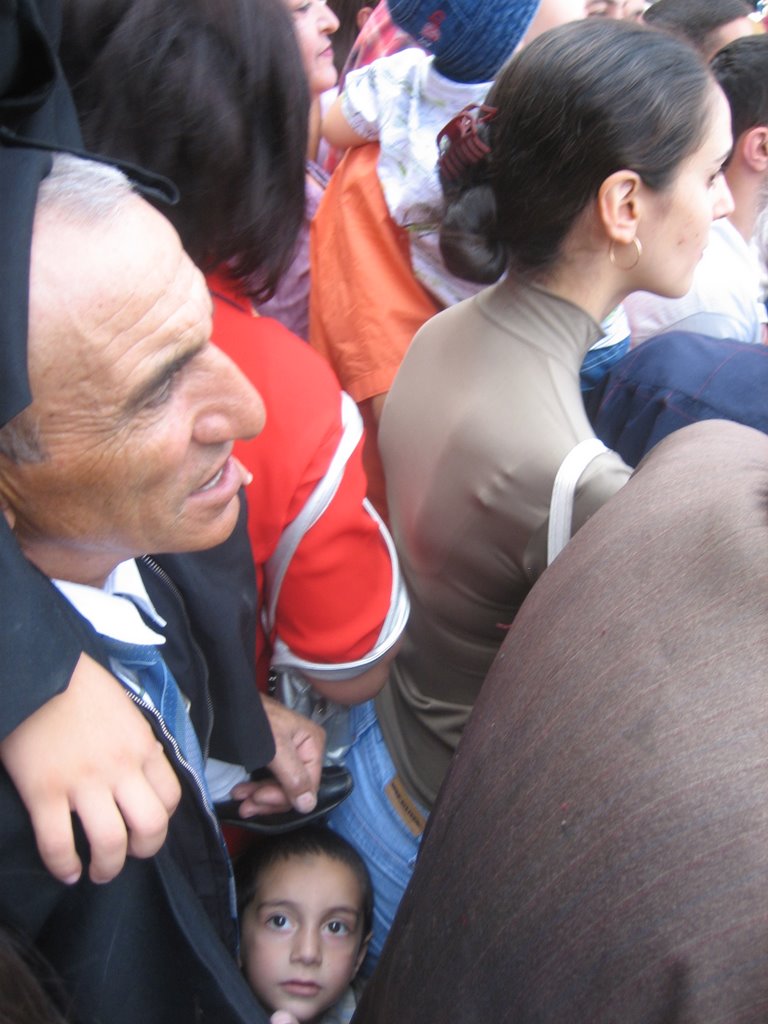
Though, to be honest, of several dozen photos taken that day, my absolute favorite of this adorable little boy impossibly wedged between the knees of hundreds of people trying to watch the parade. Little man, I feel your pain.
Monday, September 25, 2006
No small feat
15 years of independence. phew. a BIG congratulations is in order.
Here is my favorite photo from the eve-of.
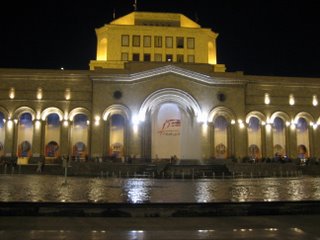
Here is my favorite photo from the eve-of.

Wednesday, September 20, 2006
contrast
contrast noun |ˈkänˌtrast| the state of being strikingly different from something else, typically something in juxtaposition or close association
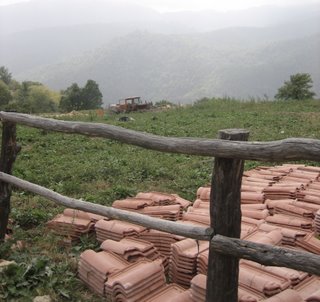
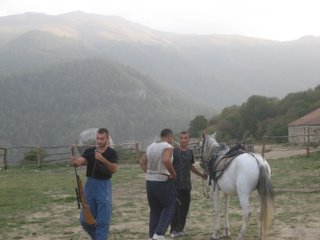
both sets of these photos are armenia. both sets of photos are of places you one can stay: a camping area in the northern region of Tavush, and the Golden Palace Hotel in Yerevan. traditional v. modern. pastoral v. cosmopolitan. both sets of photos were taken in September of the year 2006.

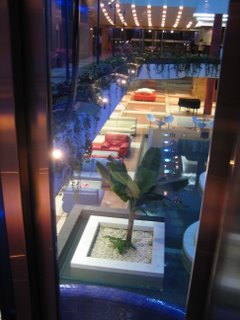
i love juxtaposition. uniformity is stagnant, so interest is created by conflict is it not? it's beautiful that both of these spaces exist simultaneously.
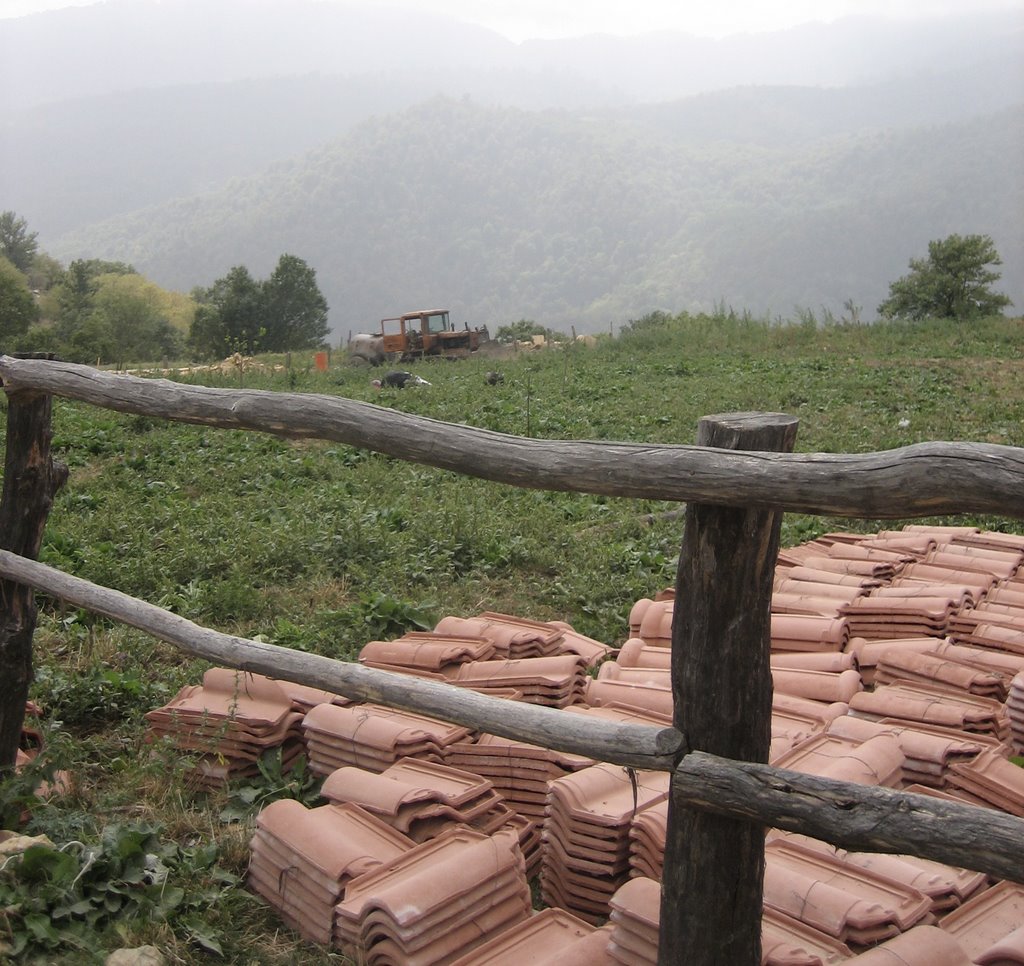
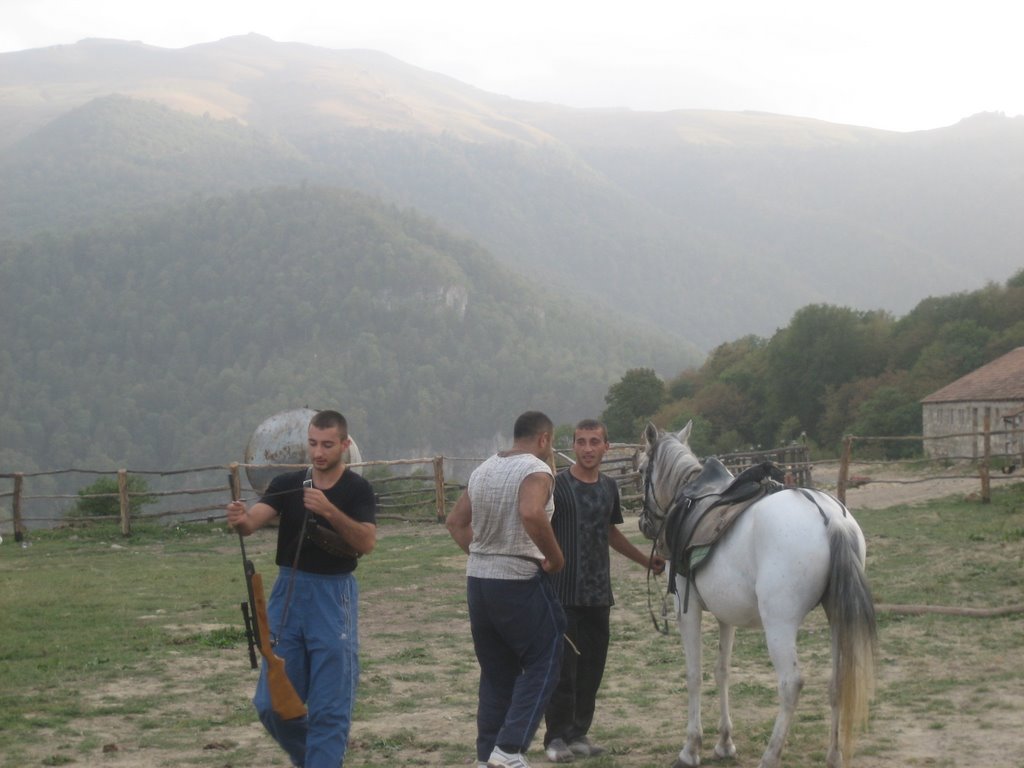
both sets of these photos are armenia. both sets of photos are of places you one can stay: a camping area in the northern region of Tavush, and the Golden Palace Hotel in Yerevan. traditional v. modern. pastoral v. cosmopolitan. both sets of photos were taken in September of the year 2006.


i love juxtaposition. uniformity is stagnant, so interest is created by conflict is it not? it's beautiful that both of these spaces exist simultaneously.
Saturday, September 16, 2006
Goodbye "Mer Hyrenik"??
Wow. I didn't know about this one. Apparently there's a heated debate "over whether Armenia should ditch its current national anthem and adopt something more modern, more attuned to today's national aspirations. There have been complaints that the song is too wimpy and gloomy." Ha! And it's more than just a debate- there's a commison already in full swing that has reduced the choices down to 5 finalists! I'll have to thank William in Tblisi for even calling my attention to it.
On an initial level I think it's an absurd idea, and will have to agree with Felix Bakhchinian, director of the Charents Literature and Art Museum in Yerevan. In this RFE/RFL article he is quoted as saying: "We need to solve more pressing problems before we begin talking about the anthem and other state attributes. Right now we have higher priorities to meet."
Though, the meat of that article is enlightening as I never realized that other post-soviets have also gone through the same nationalistic face-lift debacle. In the end though, i'm not budging on this one, so I guess you should just call me a Dashnak.
On an initial level I think it's an absurd idea, and will have to agree with Felix Bakhchinian, director of the Charents Literature and Art Museum in Yerevan. In this RFE/RFL article he is quoted as saying: "We need to solve more pressing problems before we begin talking about the anthem and other state attributes. Right now we have higher priorities to meet."
Though, the meat of that article is enlightening as I never realized that other post-soviets have also gone through the same nationalistic face-lift debacle. In the end though, i'm not budging on this one, so I guess you should just call me a Dashnak.
Friday, September 15, 2006
To a new beautiful generation
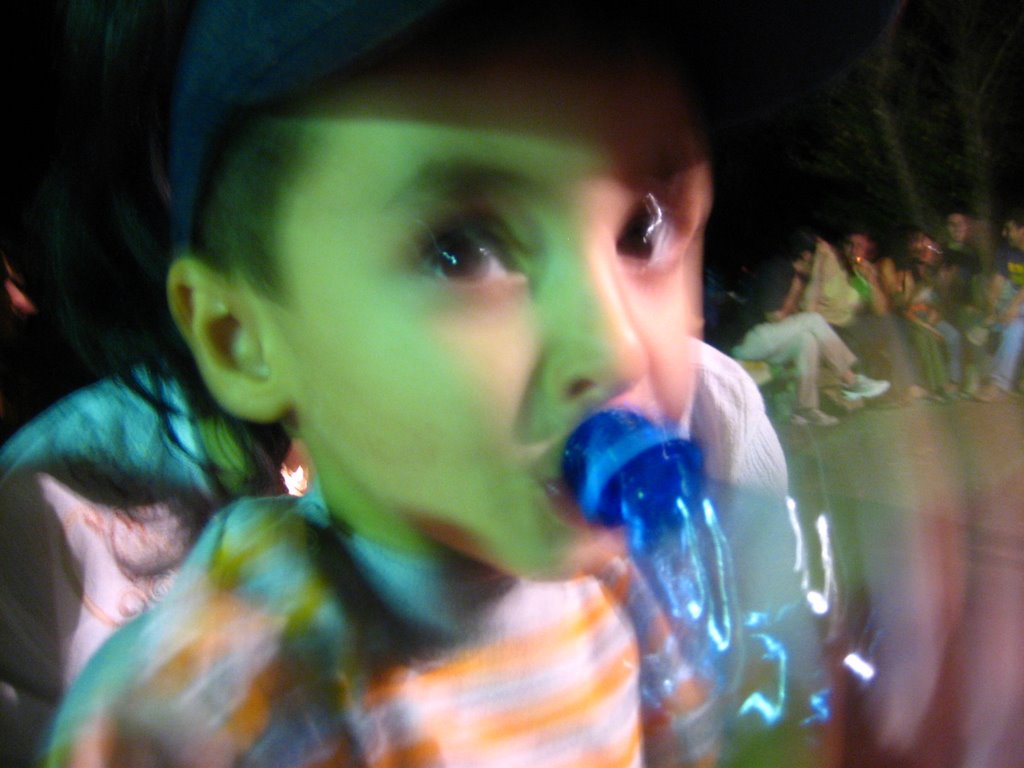
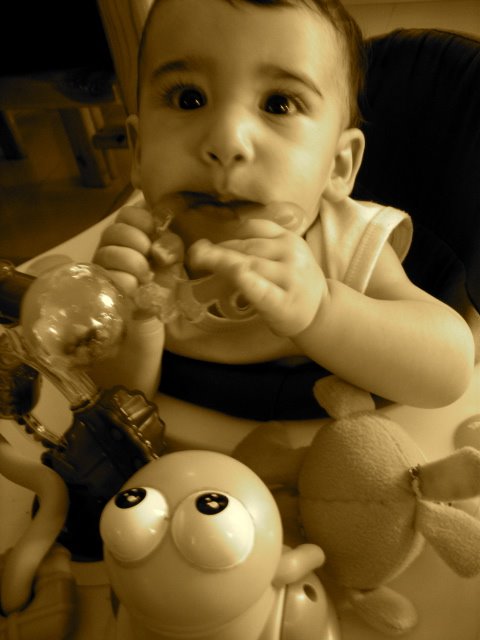
Here is a blog intended to make everyone smile. The streets of Yerevan are full of cute children. All the time they can be spotted tottering along side their parents down the crowded streets. School started on September 1st, so now there are even more children out with their backpacks and combed hair cruising around town. Here are some pictures of really adorable kids that I've taken over the last few months.




Subscribe to:
Posts (Atom)